The coordinator you keep almost hiring
A right-of-way coordinator runs $85K to $106K a year in salary alone, national ranges published for the role. At one to three documents a week, that hire spends most of the year waiting for intake.
Bellingham, WA · In production 12+ months · Flat rates, in writing
A document pipeline for right-of-way firms. Scopes of work, cost estimates, and change orders on your client's template, priced from your rate sheet, audited line-by-line against the source before anything ships.
Under NDA as standard · Human-reviewed, every document
Ask about any of these on a call and we can back them up
12+ months
Scopes, estimates, and change orders delivered weekly to one utility contractor, through engineer turnover and rate-sheet changes.
16–20/week
Current document volume, sustained week over week.
Same day
Turnaround target from the engineer's email to a submission-ready document.
0 ever
Documents shipped without the line-by-line source audit and a human sign-off.
~100%
Approval rate to date on change orders built from field narratives.
26,817
Right-of-way documents in the training corpus, before your firm's own history is added.
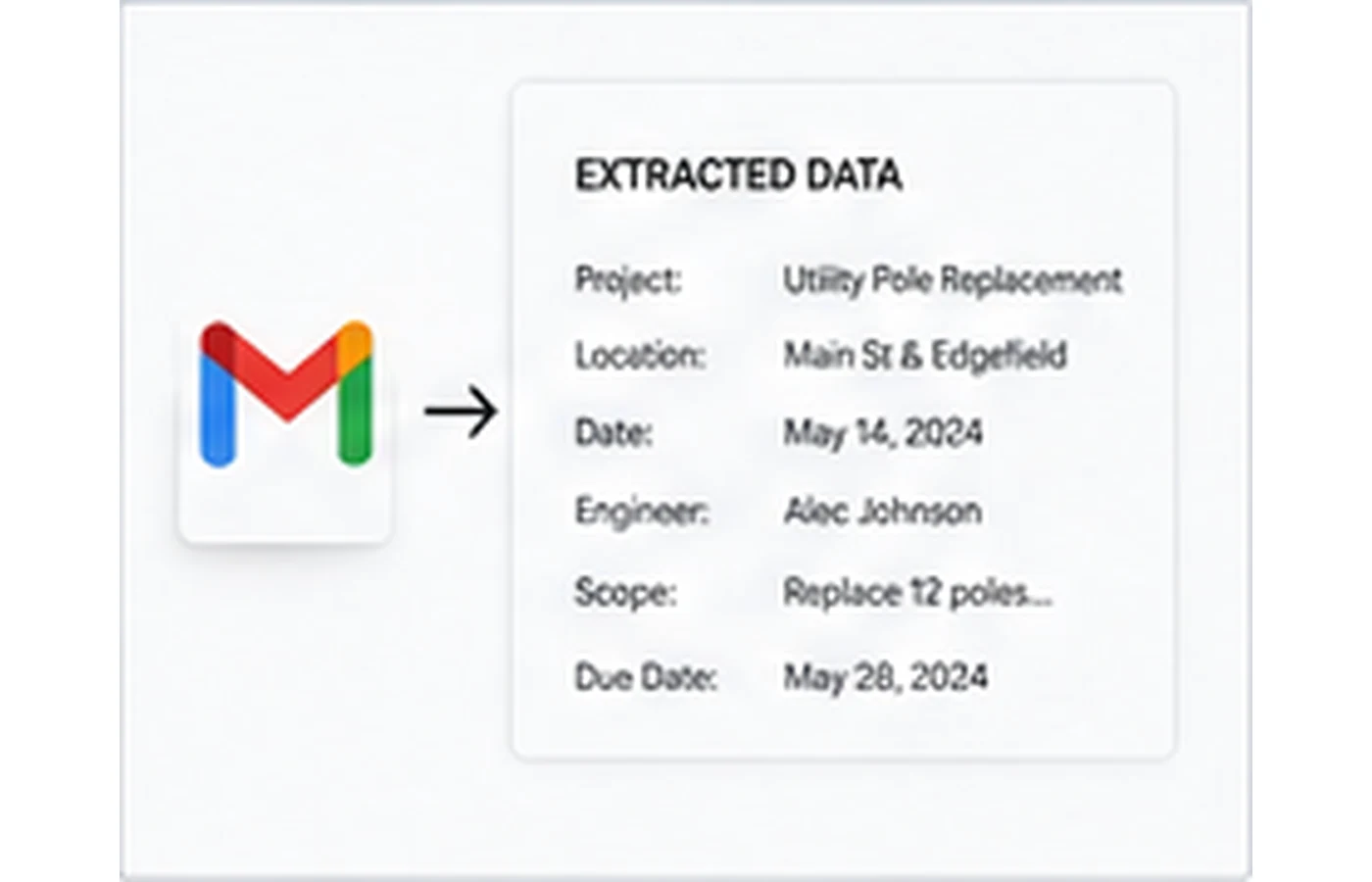
A small land-services firm holds a standing contract with a major investor-owned electric utility. Every project arrives the way yours do: an engineer's email, parcel details, a rate-sheet reference, and a deadline. What has to come back is a priced individual scope of work on the utility's own template, correct to the source, ready to submit.
We built the pipeline that does it, and it has run for over a year, growing from a few documents a week at the start to sixteen to twenty a week now, surviving a full template revision and multiple rate-sheet changes along the way.
The client and the production history are real. The identifying content is reconstructed, because the actual documents are confidential, which is exactly the standard your documents would get.
A right-of-way coordinator runs $85K to $106K a year in salary alone, national ranges published for the role. At one to three documents a week, that hire spends most of the year waiting for intake.
When field agents write their own scopes, you pay field rates for desk work and lose the field hours too. The documents also arrive formatted six different ways, which your client notices before you do.
A scope on the wrong rate sheet comes back for rework, and repeated format rejections put the MSA itself at risk. Every document here ships audited against the source, checklist attached, with a human sign-off.
Most firms start here
$250 /document
$150 /document
$950 /month
Onboarding on your firm's own document history: $750, waived on pilot projects started before September 1. No hourly meter, no percentage of contract value, no other fees. Intake stays capped so the human sign-off never gets skipped; if the calendar is full, you hear that before you send anything.
1
We sign before we see anything. Then send a live project: the engineer's email, parcel details, your client's template, the current rate sheet.
2
Priced, formatted, with the verification checklist showing each task traced to the source email. A reviewer has already signed off on the audit.
3
Against your own standard, on your own work, not a demo. If it is not submission-ready, tell us plainly. You have lost nothing; the first one is free.
4
$250 per scope or estimate, $150 per change order, retainer offered at 60 days. Governance, security, and the continuity plan are written out on the process page.

Two years ago Joshua Hill started building tools around his own right-of-way document work. For the past sixteen months he has been engineering them into one pipeline built specifically for this discipline. There is only one Joshua Hill; the pipeline exists so your firm gets the same performance, with a human reviewer signing off on every document under his supervision.
Client names stay off the page because our agreements keep them there, and yours would too. On a call, with references, we can be specific.
Background and operating history →No. The pipeline runs entirely on email and your client's own Word template. It can also read KMZ files, plan sets, and photos when your projects include them. Your engineers keep emailing the way they already do; you forward it.
Holding that is most of the job: the pipeline carries each client's template and current rate structure, and it survived a full template revision and multiple rate-sheet changes at the firm it was built inside. Firms carrying several utility clients at once are exactly who this is for.
Yes, and we expect to. All work is done under confidentiality as standard, which is why the case study on this site is anonymized.
You keep operating. Your templates, rate sheets, and every document produced live in your systems, not ours, and there is nothing installed to break. The full continuity plan is on the process page.
The first one is free, on a live project
You have a scoping email you have been putting off. Forward it, and the priced document comes back free, so you judge the pipeline on your own work, not a demo.
Replies come from Joshua, usually within one business day.